
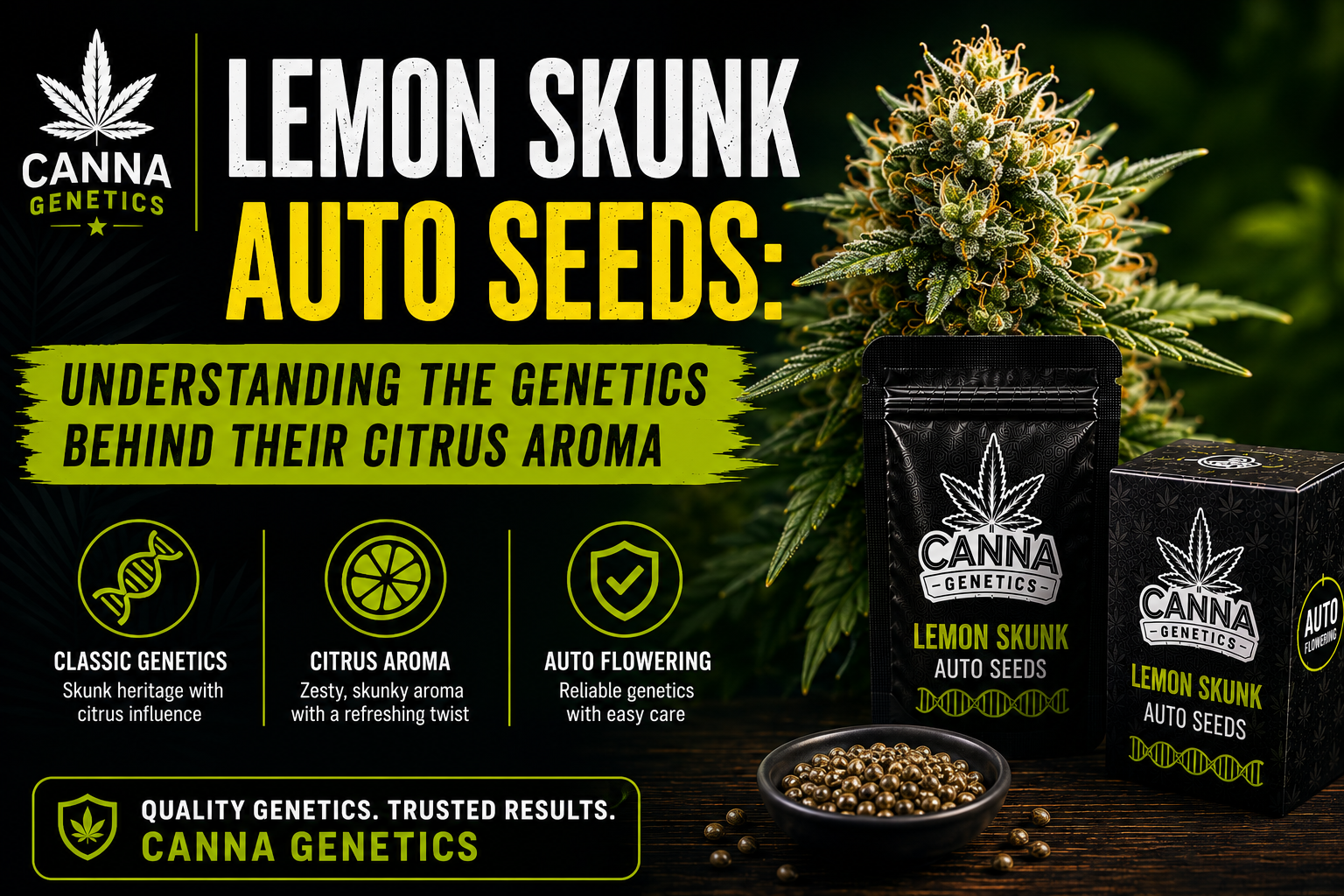
Citrus-forward strains hold a special place among cannabis collectors, and few genetic lines capture that character as well as Lemon Skunk. Lemon Skunk Auto seeds bring this legendary citrus profile into an autoflowering format, combining decades of Skunk breeding history with the convenience of automatic genetics.
This guide breaks down what makes the genetics behind Lemon Skunk Auto seeds so distinctive, from their breeding lineage to their terpene profile, along with what UK collectors should understand before adding them to a collection.
The Breeding History Behind Lemon Skunk Auto Seeds
To understand what makes this genetic line special, it helps to look at where it comes from. The lineage behind Lemon Skunk Auto seeds carries a strong pedigree within the wider Skunk family.
- The original Lemon Skunk genetics trace back to a cross of Skunk 1 and Citral phenotypes.
- Skunk genetics were stabilised decades ago and remain one of the most respected foundations in cannabis breeding.
- The original photoperiod line earned recognition at several well-known breeding competitions over the years.
- Autoflowering breeders later introduced ruderalis genetics into this lineage to create automatic flowering versions.
This combination of proven heritage and automatic convenience is exactly why Lemon Skunk Auto seeds continue to attract attention from collectors who value both history and practicality.
Why the Skunk Family Remains So Influential
The Skunk genetic family has shaped cannabis breeding for decades, and understanding this broader context adds depth to why Lemon Skunk genetics carry so much weight.
- Skunk genetics became a foundation strain during the 1970s, prized for balanced effects and reliable structure.
- Countless modern hybrids, including many autoflowering lines, trace some portion of their genetics back to this family.
- Breeders continue to use Skunk phenotypes as a base for developing new crosses, since the genetics are considered stable and well-documented.
- This influence extends beyond a single strain, shaping an entire category of balanced hybrid genetics still popular today.
Recognising this wider context helps explain why Lemon Skunk Auto seeds carry more genetic weight than a typical citrus-flavoured autoflowering variety.
What Makes the Citrus Aroma So Distinctive
The defining feature of this genetic line is its aroma, and understanding the terpene profile explains why Lemon Skunk Auto seeds stand out so clearly among citrus-forward genetics.
- Limonene drives much of the fresh citrus character, contributing sharp lemon and lime notes.
- Myrcene adds a fruity undertone, often associated with mango and hop-like qualities.
- Caryophyllene rounds out the profile with subtle notes of pepper and spice.
- Together, these terpenes create a layered aroma that goes beyond a simple citrus smell.
This terpene combination gives Lemon Skunk Auto seeds a complex identity, with cedar, vanilla, and fruit notes often mentioned alongside the dominant lemon character.
Genetic Traits That Define This Line
A few specific characteristics explain why this genetic line has remained popular for so long among collectors and breeders alike.
- Balanced hybrid structure: The original genetics carry a roughly even split of sativa and indica traits.
- Documented competition history: The parent line has a track record of recognition at established breeding competitions.
- Strong terpene stability: The citrus-forward aroma profile remains consistent and recognisable across different breeding lines.
- Autoflowering adaptation: Ruderalis influence introduces automatic flowering genetics while preserving the core aroma and effect profile.
These traits combine to make Lemon Skunk Auto seeds a genetic line worth understanding in depth, rather than just another citrus-scented variety on the market.
What Are Feminised Cannabis Seeds?
Before exploring where this genetic line fits into a collection, it helps to understand a term that comes up often when browsing seed banks. Feminised seeds are bred specifically to produce female plants almost exclusively.
- Breeders achieve this through specialised pollination techniques between two female plants.
- This differs from regular seeds, which can produce either male or female genetics in roughly equal numbers.
- Most modern autoflowering lines, including many citrus-forward genetics, are bred and sold in feminised form.
How This Line Compares to Its Photoperiod Predecessor
Many collectors want to understand how the autoflowering version differs genetically from the original photoperiod line it descends from.
- The original photoperiod Lemon Skunk carries an even sativa-indica split without any ruderalis influence.
- The autoflowering version introduces automatic genetics while aiming to preserve the same terpene and effect characteristics.
- Photoperiod genetics tend to reach greater heights, while autoflowering crosses typically stay more compact.
- Collectors interested in genetic diversity often value having both versions represented within a collection.
This distinction matters for anyone building a collection around Lemon Skunk Auto seeds, since understanding the relationship between the original and autoflowering lines adds real context to the genetics.
A Note on Legal Status in the UK
Before considering where to source genetics like this, it is worth understanding how cannabis seeds are legally treated in the UK.
- Seeds are sold strictly as collectibles or for genetic preservation purposes.
- Germinating cannabis seeds remains illegal under UK law, regardless of where the seeds were purchased.
- Reputable UK sellers do not provide cultivation or germination guidance of any kind.
- Buyers remain responsible for understanding and following the laws that apply in their own region.
Any trustworthy seed bank offering Lemon Skunk Auto seeds will make this distinction clear from the outset, treating seeds purely as a collectible product.
Comparing Lemon Skunk Auto Seeds to Other Citrus Genetics
Collectors often compare Lemon Skunk Auto seeds against other citrus-forward lines before adding them to a collection.
- Compared to newer, less-established citrus hybrids, this lineage carries a documented competition history behind it.
- Compared to purely sativa-leaning citrus strains, the balanced hybrid structure offers a more even genetic profile.
- Compared to fruit-forward genetics without a Skunk background, the terpene complexity here includes sharper, more pungent undertones alongside the citrus notes.
This comparison highlights why Lemon Skunk Auto seeds remain a reference point for citrus genetics, even as new autoflowering crosses continue to enter the market.
The Bottom Line
The genetics behind Lemon Skunk Auto seeds combine a well-documented Skunk lineage with a distinctive, layered citrus aroma that few other genetic lines can match. For UK collectors focused on genetic preservation, this variety represents a respected piece of cannabis breeding history, sold strictly for collectible purposes.
Discover this citrus classic and more premium genetics at Canna Genetics today.
Frequently Asked Questions
This line traces back to a cross of Skunk 1 and Citral, with ruderalis genetics later introduced to create the autoflowering version of the strain.
Feminised seeds are bred to produce almost exclusively female plants. Most modern autoflowering citrus genetics, including this line, are typically offered in feminised form.
Yes, seeds are legal to purchase and collect in the UK as souvenirs or for genetic preservation. Germinating cannabis seeds remains illegal under UK law.
Limonene drives the sharp lemon and lime character, while myrcene and caryophyllene add fruity and peppery undertones to the overall profile.
Its documented competition history, balanced hybrid structure, and distinctive citrus terpene profile make it a standout choice for building a well-rounded collection.
